

Performing Economic Realities: Climate Week on Value, AI, and the Contest Over Contribution
My worlds all collided at Climate Week, and it’s taken me another week to metabolize the bafflement of many and find the corners of coherence, trying to remember more than the variation of seating charts, convening experiences, and which rooms were set to Arctic tundra versus tropical rainforest.
Outcomes-based AI, blended finance, systems finance portfolios, Indigenous finance, fracture mapping, and algorithmic justice, all performing different economic realities, each encoded in rooms with their own microclimate negotiations. The universal constant: valuation logics stratify by temperature zone. Pack for four seasons in one day. Each approach constructs what counts as an outcome, who counts as a decision-maker, and what counts as success. None, tragically, constructed better HVAC systems.
Outcomes-based models aren’t neutral measurement tools. They actively construct what counts as an outcome, who counts as a decision-maker, and what counts as success. They enact particular economic realities while foreclosing others.
As people who design systems that define outcomes, results, and value, whose valuation practices are we encoding? Whose calculative devices are we making infrastructure?
These are questions of contribution.
Whose definitions of value are we performing into reality?
Flashback to a Different Variety of Capitalism
Climate Week brought me into direct contact with development bank logic, reminding me of my early career at The Japan Development Bank, where I learned how cultural and social values become part of economic infrastructure.
We forecasted early internet adoption not only for its economic impact, but also for its institutional role in social cohesion. Employment was an explicit objective within our qualitative and quantitative frame. That same logic later created conditions for Japan’s stagnation: banks kept bad loans afloat, zombie companies alive, to maintain employment commitments.
That orientation remains visible in how Japan welcomes AI today, as a tool to strengthen relationships, with employment protections presumed. In contrast, US AI is pitched as worker replacement, arriving without safety nets, generating resistance, fear, cynicism, and a frantic scramble to build quick, flip faster, and accumulate wealth before AGI arrives to make it all moot. The underlying social agreements create conditions for any systems change. One society fears unemployment; the other has monetized the fear itself.
Varieties of Lean
Take the case of lean manufacturing’s journey from the US to Japan and back again: same principles, with radically different results. This lesson is being shared by tech strategists today who want to point out exactly where we are in the history of AI adoption, that we will quickly run out of the automation and efficiency playbook, and need to take on restructuring governance and value by redesigning systems.
In Toyota’s Japan, lean emerged embedded in valuation practices around collective improvement (kaizen), long-term thinking, and respect for workers. The Toyota Production System was designed as a coordination architecture that aligned the company with its suppliers, empowered line workers to halt production when defects emerged, and created dense feedback loops to facilitate learning that could compound across the organization. The counting devices, which measured what, how, and by whom, reflected these values.
In the US auto industry, the same techniques were applied, but with different valuations. Lean became cost-cutting. Consultants packaged it as efficiency (charging by the slide deck), and executives measured success in working capital and headcount reductions. Short-term results showed: less inventory and tighter balance sheets. Systemic gains did not. Production fragility increased. The measurement devices counted labor costs, not worker knowledge; quarterly returns, not long-term improvement. American lean excelled at measuring what was easiest to cut.
Lean startup attempted to revive the continuous learning loop, adopting the kanban as software counting “to-do,” “doing,” “done,” to accelerate SaaS and smartphone apps now awaiting their turn for AI to rip out and replace.
The calculative devices enact whatever values are embedded in our collective social commitments.
When we build outcomes-based business models, we’re not creating neutral structures. We’re assembling valuation infrastructures that perform specific economic realities.
Climate Week: Many Performances of Value
Here are examples of the many ways value and valuation were being performed at Climate Week. I was grateful to wander into so many of these rooms.
Cooperation Agreements and Blended Finance:
In cold rooms in tall buildings with panel formats, time for questions at the end:
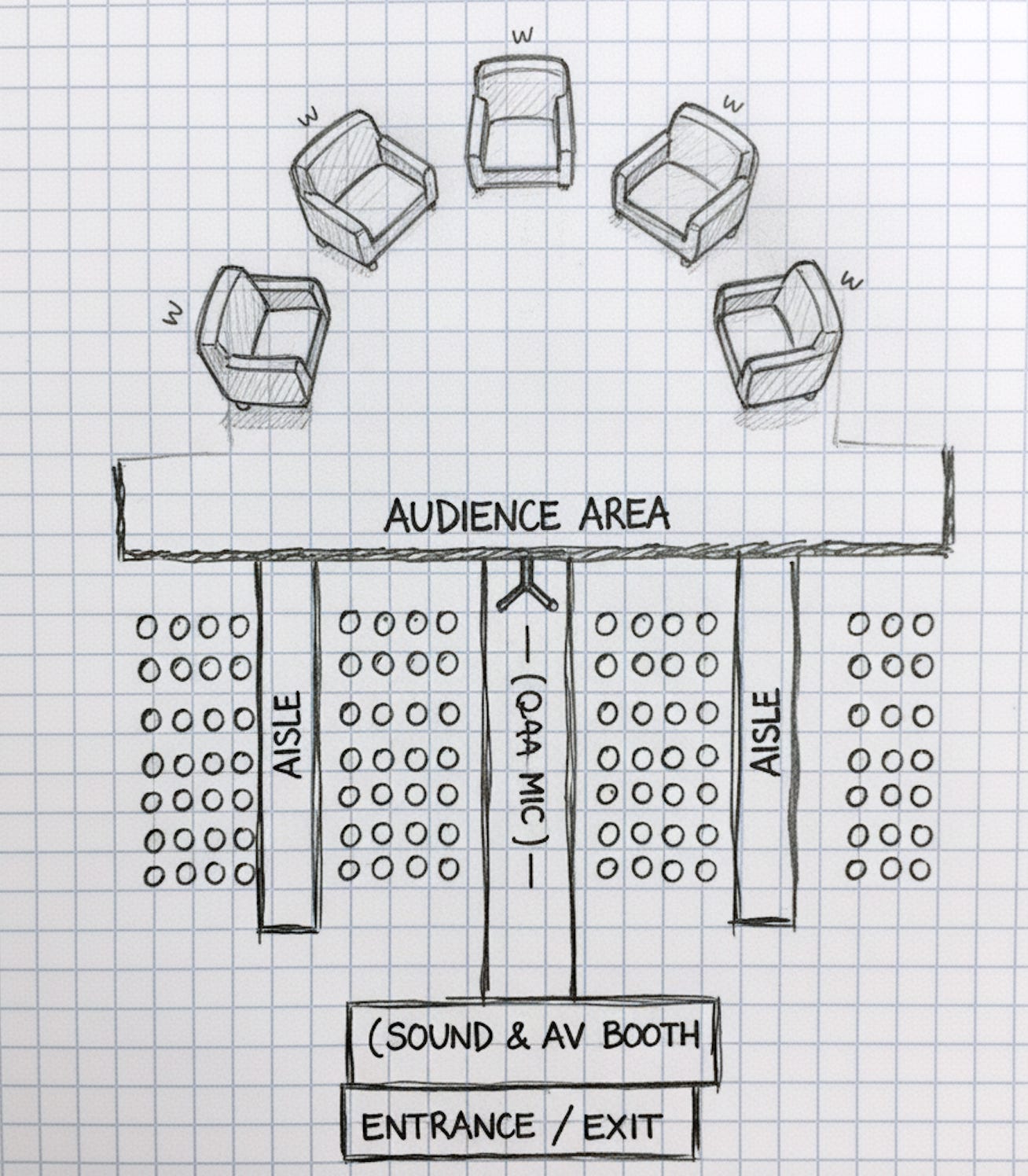
Structured finance that starts with philanthropic and development finance to de-risk and crowd in private capital. There are pre-specified metrics, required attribution models, and risk-adjusted returns. Blended finance performs funder-defined value, transaction-based relationships, often leaning on partnerships with NGOs or community-based organizations to understand how impact-intending investments will be accepted by beneficiaries, but they are rarely seen as co-producers of outcomes. The metrics enact what will matter by structuring incentives and determining what is legible for capital.
One story told was that blended finance has been crippled by the removal of USAID, once the primary catalytic funder. Many things were said in one particular roundtable that requested all phones be placed in pouches before the worrying and laments could begin.

But political economist Yuen Yuen Ang’s concept of “polytunity,” finding opportunities within constraints by “using what you have”, suggests a different narrative. Blended finance is moving forward: the Climate Investment Funds’ inaugural capital markets bond raised $500 million in 2024 and was oversubscribed by over six times. Yet barriers remain, particularly credit rating agencies’ continued influence on country borrowing costs.
Systems Finance:
Systems finance is emerging as a niche approach that employs carefully curated combinations of financial vehicles tailored for specific contexts, operating at multiple levels, building the field one acronym at a time.
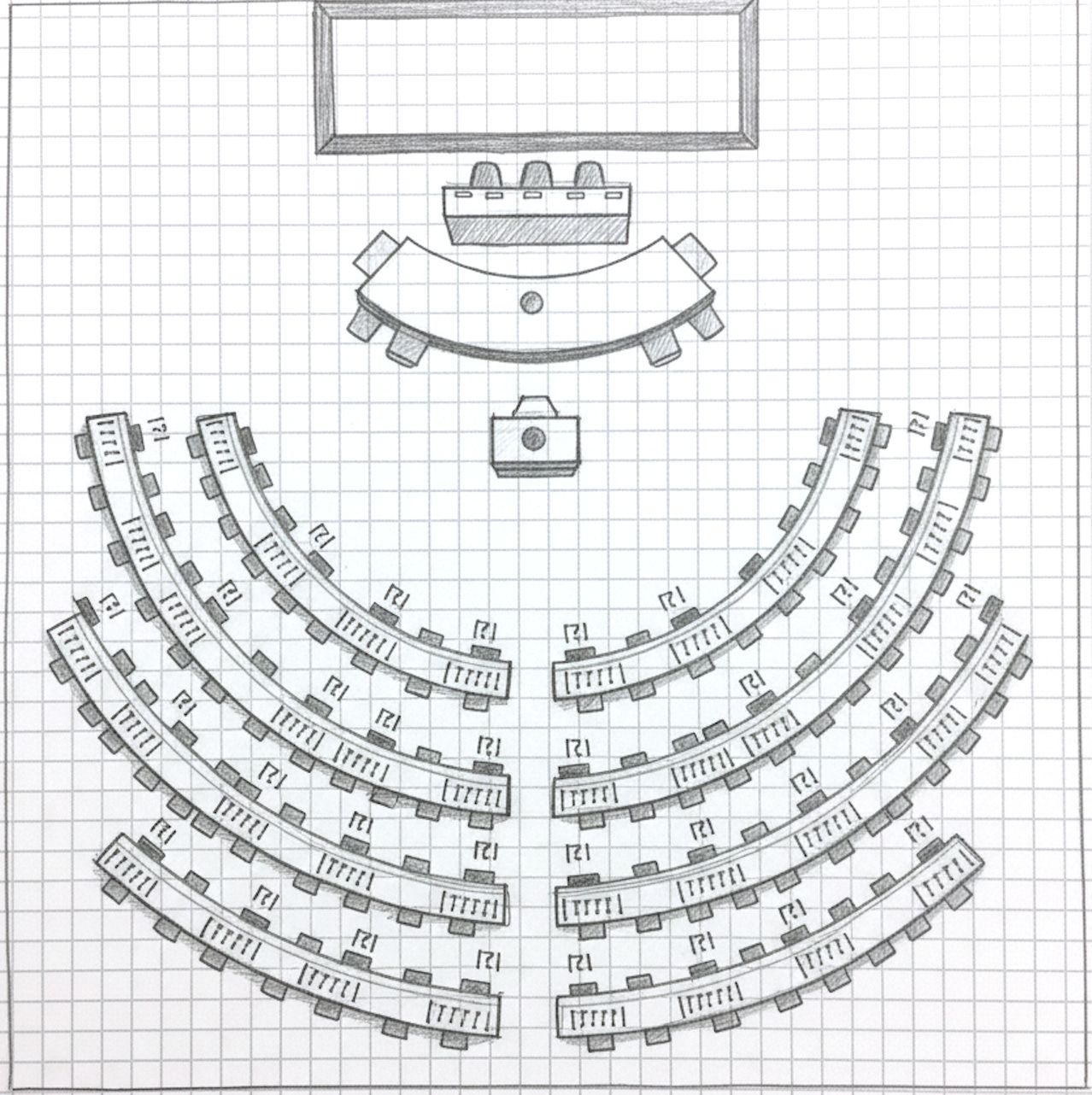
Systems-level actors focus on changing the rules, institutions, and legal frameworks that govern finance, creating regulatory infrastructure, disclosure standards, prudential requirements, and market architectures. Organizations like TIIP, PRI, and The Predistribution Initative operate at this sphere, engaging with institutional investors, while these and other institutional reformers, UN initiatives, and policy advocates work to change laws, regulations, and fiduciary interpretations.
TWIST, Deep Transitions Lab, Dark Matter Labs, and MIT Sloan Sustainability Initiatives are all prototyping or researching approaches while investing. These different actors apply different approaches using systems thinking and/or complex systems science to understanding social problems and addressing them through the deployment of multiple forms of capital with the intent of transforming human and natural systems.
Distinct types of investment work together: investments with direct financial returns; enabling investments that yield no direct returns but support critical infrastructure, such as intermediary organizations and policy advocacy; and strategies whose investments may not yield market returns themselves but catalyze follow-on investments that can generate returns.
FEST is a collective of funders and practitioners operating financing ecosystems for systemic transformation, including systems-level and on-the-ground. The convenings are more convivial, open for discussion and inquiry. These approaches emphasize contribution over attribution and rely on evaluation, which shifts from rendering judgments to facilitating continuous learning and deliberation as systems evolve.

Outcomes-based approaches in systemic finance are considered with caution, as some contributions to systems change are inherently unquantifiable or not yet knowable, yet will later prove essential to achieving transformative outcomes.
Indigenous Finance:
Investment funds and collectives led by Indigenous leaders from around the world came to Climate Week to demonstrate how their work has moved to perform in different economic realities, not following compromised versions of conventional metrics.
Kim Pate, the Managing Director of NDN Collective, describes “braided capital,” loans accompanied by grants and resources that “synergistically support the growth of the project or business throughout the life of the loan,” removing traditional collateral requirements and embracing procedures that better reflect the needs of the communities they serve. Compared to so-called “patient capital” within social impact time horizons; NDN capital is operating in fundamentally different temporalities: seven generations versus quarterly returns, land as relative versus land as asset.

The Building Strategy for Indigenous-Led Climate Finance event put careful consideration into the design of the convening, with indigenous funders invited to a roundtable discussion, supported by rows of funders, collaborators, and supporters, and the offerings of bison and four brother salad from Buffalo Jump NYC, a catering firm on a mission to “Re-Claim and Re-Indigenous food culture in NYC and hopefully someday the country and the world.” This was a convening designed for transformation, shifts in perspective, and power-aware.
How are outcomes considered? SSIR just published a write-up of the Raven Indigenous Outcomes Funds in Canada’s Community-Driven Outcomes Contracts (CDOCs), a model that centers Indigenous communities as leaders throughout the entire project lifecycle. Unlike traditional social impact bonds, where governments or funders define problems and solutions, sometimes with limited community consultation, CDOCs ensure that communities themselves define what counts as an outcome, design the interventions, establish governance structures, and determine how success is measured.
In the Minoayawin Initiative addressing diabetes in the Island Lake Anisininew Nation, outcomes aren’t limited to clinical markers like blood-glucose levels. The community co-created a Mino-Bimaadiziwin score, drawing from the Anishinaabe concept of “living a good life in harmony,” that measures social and cultural well-being, including participation in community life and contribution to cultural traditions. The initiative includes a community-designed “healthy hub,” a communal kitchen and gathering space that emerged directly from community consultation. “We would never have thought about that if we hadn’t asked the community,” notes Raven Outcomes founder Jeff Cyr.
These CDOCs continue to engage private capital and utilize outcomes-based repayment structures. Investors provide upfront funding and are repaid when verified outcomes are achieved. However, the shift lies in who holds power: community elders, health professionals, and community members sit alongside investors and public agencies in the governance structure. In the Fisher River Cree Nation and Peguis First Nation geothermal project, community members weren’t just beneficiaries; they were trained, certified, and employed to install energy systems, with community coinvestment in labor, time, and materials. The $5.1 million in private capital was repaid based on verified energy savings, enabling communities to build long-term capacity rather than merely receiving services.
The framing of investors “being a good relative” is an ontological shift that rejects the investor-investee binary in favor of kinship obligations. This is a valuation system that enacts different worlds where prosperity includes ceremony, language, and relationality as constitutive elements of economic health. CDOCs demonstrate that outcomes-based models can be designed and structured with community leadership, shared governance, and culturally grounded quantitative metrics and qualitative evaluation. They can become vehicles for self-determination.
Outcomes-Based AI Models:
In contrast, a rising organizing logic for climate finance and technology in 2025 is outcomes-based AI models. At Climate Week, the integration of AI, IoT, and data-driven monitoring systems framed a new form of “planetary intelligence. These systems promise traceability, real-time verification, and algorithmic accountability across emissions, supply chains, and ecosystems.

The framing assumes that what can be sensed can be priced, and what can be priced can be governed. Planetary valuation becomes a continuous, data-driven process, a shift from discrete transactions to automated, performance-based infrastructures. The new logic links carbon markets, biodiversity credits, and adaptation metrics.
This version of Climate Week was less about pledges or blended structures and more about building valuation systems that treat Earth as a computable entity. The promise is total legibility: every hectare, molecule, and transaction folded into an outcomes model. Yet, like earlier calculative infrastructures, these AI-driven models enact particular valuation logics, determining which forms of life, labor, and knowledge become legible to capital.
But there are those braiding a different future, connected to the past.
The work of Nkwi Flores and Savimbo challenge this computable approach, returning valuation to the ground, to forests, kinship networks, and oral economies where value is produced through relation, as compared to nature-based-finance solutions designed in investment banks in London or New York.
Savimbo’s approach to regenerative finance, rooted in Indigenous Amazonian epistemologies, reframes “outcomes” as reciprocal commitments among communities, land, and ecosystems. Their valuation practices emphasize narrative accountability, stories and ceremonies as records of value, rather than algorithmic proof. These practices resist the enclosure of valuation within data infrastructures. They remind us that legibility to capital is not the same as legitimacy within community.
Where AI-driven climate valuation seeks a single planetary ledger, these movements propose a pluriverse of ledgers, many ways of knowing, measuring, and sustaining what matters.
When we design AI-enabled, outcomes-based models for climate, we are not just innovating measurement. We are scripting future governance, deciding which worlds, and whose worlds, will count as successful outcomes.
System Optimization vs. System Transformation
Before designing outcomes-based models anywhere, are we:
Optimizing Systems: Making existing systems more efficient, with the risk of reinforcing unsustainable or fragile underlying rules.
Transforming Systems: Changing underlying rules and structures, challenging meta-rules, and reconfiguring flows of value.
Most claim they want transformation, but the metrics we design tend to incentivize something else.
Traditional outcomes-based models ask: “Did our investment directly cause X measurable outcome?”
The transformation question: “How does this contribute towards the system transformation we want to see?”
Our current design patterns, pre-specified outcomes, attribution requirements, and milestone payments foreclose the emergent adaptation that systems change requires.
Business Models and the Politics of Infrastructure
Our business models become calculative devices through which value gets assessed, resources allocated, and success determined. Infrastructure is path-dependent. The valuation practices we encode now will structure what can happen later. If our outcomes-based systems encode conventional metrics, alternative valuation practices become illegible.
We are in a contest over which valuation configurations become infrastructure, which mega infrastructure projects require gargantuan valuations, which counting devices become standard, and which performances of economy become materially enacted.
Investors are currently incentivizing the shift to outcomes-based pricing to move from the “software eats the world” stage of digitization (digitizing file cabinets) to the “software eats labor” stage (vaporizing human work).
Whose futures are we enacting? Through whose valuation practices?
What This Means for What We Make Next
Practical and sometimes terrifying shifts we might make:
- Ask: Who designs? Who might be missing from the table? Who’s tried this before? What can we learn from those who came before us?
- Design for contribution, evaluate through transformative outcomes (building or expanding niches, opening regimes), not just adoption metrics.
- Build structures that recognize financial and non-financial contributions.
- Consider which valuation practices you’re encoding, and structure to enable adaptive capacity and long-term system transformation.
- Accept that some contributions are unquantifiable.
- Create space for plural valuation practices, rather than forcing everything into a single, calculative frame.
- Question the universality of conventional finance structures. What assumptions about “necessary” financial architecture might we be carrying forward unnecessarily?
- Hold space. Sometimes, good design means creating space for values that cannot and should not be compared.
Outcomes will be contested because values and valuation are contested.
As makers of AI-enabled systems, financial structures, and business models, we are not neutral. We are building narrative and calculative infrastructure that will either foreclose alternative performances or create space for multiple economic realities.
From: Contribution Design, A field guide for people who create and adapt systems of value and valuation. Subscribe here.